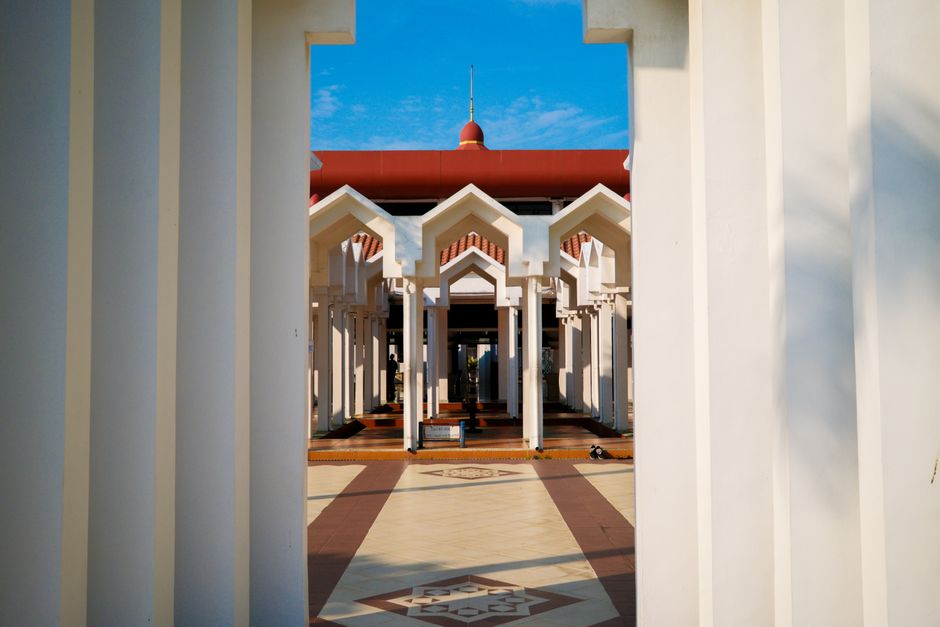
Kota Bharu is one of the interesting places to bring your family on holiday. Here, there are various attractions that are well suited to a family getaway.
Kota Bharu is also famous for its own history and stories. Here are some of the histories of Kota Bharu that you should know.

Istana Jahar
Istana Jahar
Located near Istana Balai Besar, this palace was built by Sultan Muhammad II in 1837. However, the passing of Sultan Muhammad II caused the construction of the palace to be paused for a time before it was continued by Sultan Ahmad until its completion in 1886.
Sultan Muhammad II’s purpose in building this palace was to bestow it upon his grandson, Long Kundur Bendahara, the son of Sultan Ahmad. After Sultan Muhammad III (Long Kundur Bendahara) ascended the throne, he resided in this palace and at Istana Balai Besar.
The palace originally had no name until 1911, during the reign of Sultan Muhammad IV, after he returned from Singapore.
The palace was given the name ‘Jahar’ after the trees that adorned its grounds. The palace was later given to the son of Sultan Muhammad IV, namely Tengku Ismail.
After the passing of his father, Tengku Ismail resided in this palace and did not reside at Istana Balai Besar like the sultans before him.
It is believed that Tengku Ismail was the last to reside in this palace before it was turned into a Royal Museum by the state government, after Istana Balai Besar became the official residence of the sultan following 1979.
Masjid al-Muhammadi
Masjid al-Muhammadi was built by Sultan Muhammad II during his sultanate using selected timber. This mosque became the largest centre for the spread of Islamic teachings in Kota Bharu by several renowned scholars.
Because of this, Kelantan earned the title “Serambi Mekah” (the Verandah of Mecca) and became famous throughout the archipelago.
Originally, this mosque was known as ‘Masjid Besar Kota Bharu’ by the locals and was only a small mosque before it was renovated by KDYMM Sultan Ismail Ibni Al-Marhum Sultan Muhammad IV in 1922.
Among the renovations carried out were enlarging the mosque and changing its structure from timber to concrete. Renovations were carried out four times, namely in 1959, 1968, 1976, and 1987.
Today, the mosque covers an area of 10,600 square feet and can accommodate up to 2,400 worshippers at one time.
Handicraft Village and Craft Museum (Kampung Kraftangan dan Muzium Kraf)
The Handicraft Village and Craft Museum, known as ‘Balai Getam Guri’ by the locals, is one of the main attractions in Kota Bharu and is also located in the heart of the city.
Near Istana Balai Besar, the Handicraft Village and Craft Museum showcases its own unique character by featuring a variety of locally made handicrafts.
It is also special because it is famous for the craft activities that visitors can enjoy. These include weaving mengkuang mats, weaving songket cloth, and batik printing.
In addition, visitors can also buy unique items here, including freshwater pearl bracelets, wooden furniture, and fragrant prayer beads (tasbih).
For visitors who come with their family, the Handicraft Village and Craft Museum is one of the best destinations to bring your family, as there are various interesting activities that can be done together, while also reminding the next generation about the culture and uniqueness of our own country.
Makam D’Raja Langgar
Located next to Masjid Langgar, this mausoleum is home to the graves of the late former Sultans of Kelantan along with their other close family members.
Visitors who come here usually do so for the purpose of paying respects or visiting the graves. According to the locals, visitors who wish to visit this mausoleum must dress modestly and observe the proper etiquette of visiting graves.
Among the graves that visitors can visit here are those of the first Sultan of Kelantan, namely Long Yunus Long Sulaiman, through to the father of the current Sultan of Kelantan, the late Sultan Ismail Petra Ibni Almarhum Sultan Yahya Petra.
Interesting, isn’t it? If you are in Kota Bharu, book your homestay directly here.